Khóa học
IELTS Online
IELTS Online
Giảm đến 18%
Đăng ký ngay
Mục lục [Ẩn]
Bài đọc Why zoos are good - Cam 14, Test 4, Passage 2 là một trong những bài kiểm tra toàn diện nhất về kỹ năng Reading IELTS, mang tính học thuật cao. Bài viết này sẽ cung cấp hướng dẫn giải chi tiết từng câu, từ những câu hỏi True/False/Not Given hóc búa đến các dạng Matching phức tạp, giúp bạn ôn luyện Skill Reading hiệu quả và nâng cao band điểm của mình.
Why Zoos Are Good
Scientist David Hone makes the case for zoos
A. In my view, it is perfectly possible for many species of animals living in zoos or wildlife parks to have a quality of life as high as, or higher than, in the wild (17). Animals in good zoos get a varied and high-quality diet with all the supplements required, and any illnesses they might have will be treated. Their movement might be somewhat restricted, but they have a safe environment in which to live, and they are spared bullying and social ostracism by others of their kind. They do not suffer from the threat or stress of predators, or the irritation and pain of parasites or injuries. The average captive animal will have a greater life expectancy compared with its wild counterpart, and will not die of drought, of starvation or in the jaws of a predator. A lot of very nasty things happen to truly ‘wild’ animals that simply don’t happen in good zoos, and to view a life that is ‘free’ as one that is automatically ‘good’ is, I think, an error. Furthermore, zoos serve several key purposes (18).
B. Firstly, zoos aid conservation. Colossal numbers of species are becoming extinct across the world, and many more are increasingly threatened and therefore risk extinction. Moreover, some of these collapses have been sudden, dramatic and unexpected, or were simply discovered very late in the day (14). A species protected in captivity can be bred up to provide a reservoir population against a population crash or extinction in the wild. A good number of species only exist in captivity, with many of these living in zoos (19). Still more only exist in the wild because they have been reintroduced from zoos, or have wild populations that have been boosted by captive bred animals. Without these efforts there would be fewer species alive today. Although reintroduction successes are few and far between, the numbers are increasing, and the very fact that species have been saved or reintroduced as a result of captive breeding proves the value of such initiatives.
C. Zoos also provide education. Many children and adults, especially those in cities, will never see a wild animal beyond a fox or pigeon. While it is true that television documentaries are becoming ever more detailed and impressive, and many natural history specimens are on display in museums (16/20), there really is nothing to compare with seeing a living creature in the flesh, hearing it, smelling it, watching what it does and having the time to absorb details. That alone will bring a greater understanding and perspective to many, and hopefully give them a greater appreciation for wildlife, conservation efforts and how they can contribute (25).
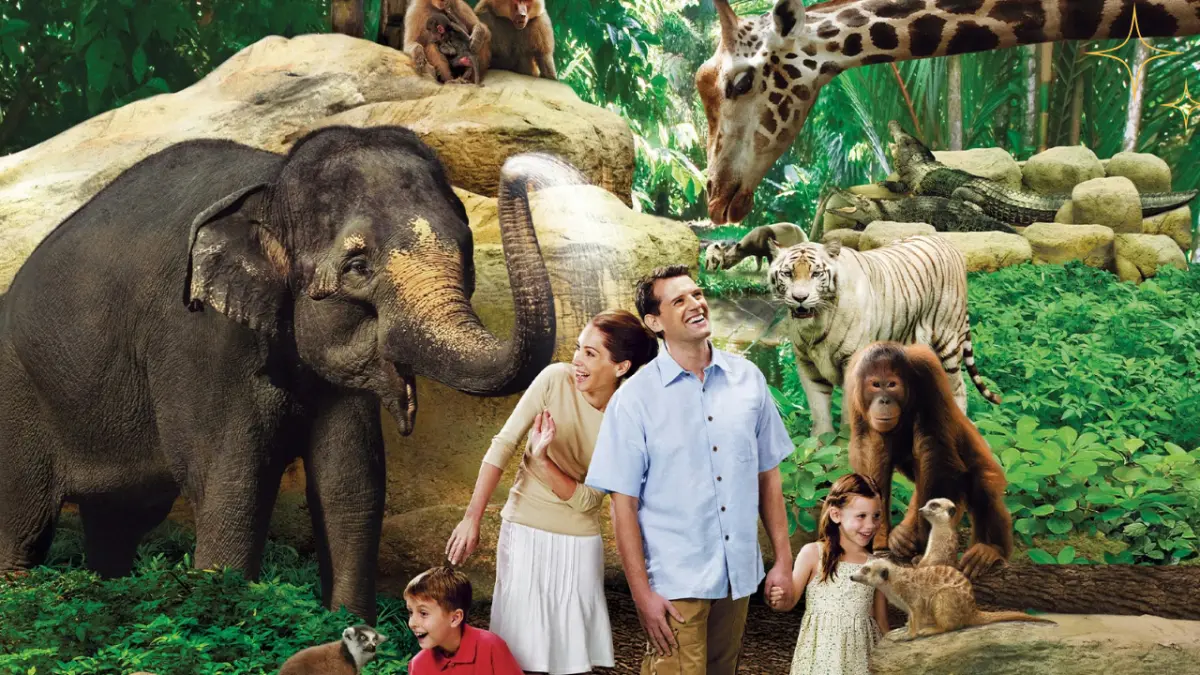
D. In addition to this, there is also the education that can take place in zoos through signs, talks and presentations which directly communicate information to visitors about the animals they are seeing and their place in the world. This was an area where zoos used to be lacking, but they are now increasingly sophisticated in their communication and outreach work (21). Many zoos also work directly to educate conservation workers in other countries, or send their animal keepers abroad to contribute their knowledge and skills to those working in zoos and reserves (23/24), thereby helping to improve conditions and reintroductions all over the world (26).
E. Zoos also play a key role in research. If we are to save wild species and restore and repair ecosystems we need to know about how key species live, act and react. Being able to undertake research on animals in zoos where there is less risk and fewer variables means real changes can be effected on wild populations (15). Finding out about, for example, the oestrus cycle of an animal or its breeding rate helps us manage wild populations. Procedures such as capturing and moving at-risk or dangerous individuals are bolstered by knowledge gained in zoos about doses for anesthetics, and by experience in handling and transporting animals (22). This can make a real difference to conservation efforts and to the reduction of human-animal conflicts, and can provide a knowledge base for helping with the increasing threats of habitat destruction and other problems.
F. In conclusion, considering the many ongoing global threats to the environment, it is hard for me to see zoos as anything other than essential to the long-term survival of numerous species. They are vital not just in terms of protecting animals, but as a means of learning about them to aid those still in the wild, as well as educating and informing the general population about these animals and their world so that they can assist or at least accept the need to be more environmentally conscious. Without them, the world would be, and would increasingly become, a much poorer place.
Questions 14-17
Reading Passage 2 has six paragraphs, A-F.
Which paragraph contains the following information?
Write the correct letter, A-F, in boxes 14-17 on your answer sheet.
14 a reference to how quickly animal species can die out
15 reasons why it is preferable to study animals in captivity rather than in the wild
16 mention of two ways of learning about animals other than visiting them in zoos
17 reasons why animals in zoos may be healthier than those in the wild
Questions 18-22
Do the following statements agree with the information given in Reading Passage 2?
In boxes 18-22 on you answer sheet, write
TRUE if the statement agrees with the information
FALSE if the statement contradicts the information
NOT GIVEN if there is no information on this
18 An animal is likely to live longer in a zoo than in the wild
19 There are some species in zoos which can no longer be found in the wild.
20 Improvements in the quality of TV wildlife documentaries have resulted in increased numbers of zoo visitors.
21 Zoos have always excelled at transmitting information about animals to the public.
22 Studying animals in zoos is less stressful for the animals than studying them in the wild.
Questions 23 and 24
Choose TWO letters, A-E.
Write the correct letters in boxes 23 and 24 on your answer sheet.
Which TWO of the following are stated about zoo staff in the text?
A Some take part in television documentaries about animals
B Some travel to overseas locations to join teams in zoos.
C Some get experience with species in the wild before taking up zoo jobs.
D Some teach people who are involved with conservation projects.
E Some specialise in caring for species which are under threat.
Questions 25 and 26
Choose TWO letters, A-E
Write the correct letters in boxes 25 and 26 on your answer sheet.
Which TWO of these beliefs about zoos does the writer mention in the text?
A They can help children overcome their fears of wild animals.
B They can increase public awareness of environmental issues.
C They can provide employment for a range of professional people.
D They can generate income to support wildlife conservation projects.
E They can raise animals which can later be released into the wild.
>>> Xem thêm: Những sai lầm khi luyện IELTS Reading cần tránh và cách khắc phục
|
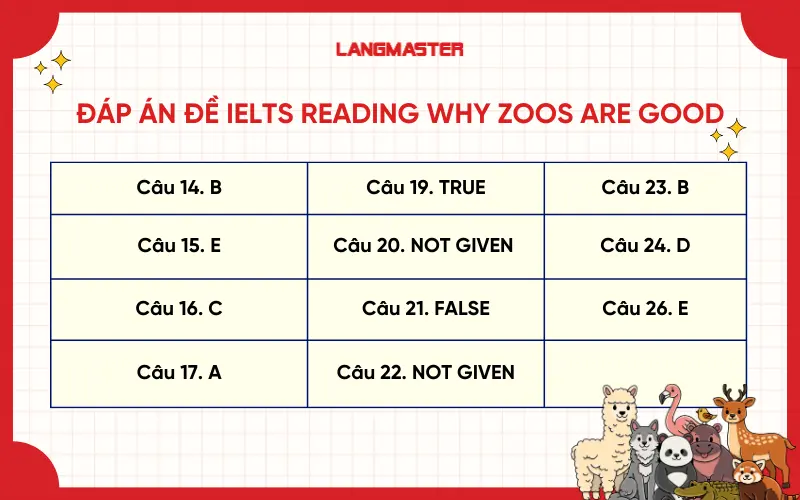
Câu 14. B |
Câu 21. FALSE |
|
Câu 15. E |
Câu 22. NOT GIVEN |
|
Câu 16. C |
Câu 23. B |
|
Câu 17. A |
Câu 24. D |
|
Câu 18. TRUE |
Câu 25. B |
|
Câu 19. TRUE |
Câu 26. E |
|
Câu 20. NOT GIVEN |
Giải thích chi tiết:
PHẦN 1: QUESTIONS 14 - 17 (MATCHING INFORMATION)
Câu 14: A reference to how quickly animal species can die out
Đáp án: B
Giải thích: Trong đoạn B có câu: "Moreover, some of these collapses have been sudden, dramatic and unexpected..." (Hơn nữa, một vài trong số những sự sụt giảm này diễn ra đột ngột, kịch tính và đầy bất ngờ). Cụm từ "sudden" và "dramatic" tương ứng với "how quickly" trong câu hỏi.
Câu 15: Reasons why it is preferable to study animals in captivity rather than in the wild
Đáp án: E
Giải thích: Đoạn E nêu rõ: "Being able to undertake research on animals in zoos where there is less risk and fewer variables means real changes can be effected..." (Việc có thể thực hiện nghiên cứu trong sở thú - nơi có ít rủi ro và ít biến số hơn...). Đây chính là lý do tại sao nghiên cứu trong sở thú lại được ưu tiên (preferable) hơn.
Câu 16: Mention of two ways of learning about animals other than visiting them in zoos
Đáp án: C
Giải thích: Đoạn C đề cập: "While it is true that television documentaries... and many natural history specimens are on display in museums...". Hai cách khác để học về động vật là qua phim tài liệu truyền hình và mẫu vật trong bảo tàng.
Câu 17: Reasons why animals in zoos may be healthier than those in the wild
Đáp án: A
Giải thích: Đoạn A liệt kê các yếu tố giúp động vật khỏe mạnh hơn: "varied and high-quality diet", "illnesses... will be treated", "spared bullying", "do not suffer from... parasites or injuries".
>> Xem thêm: Giải đề IELTS Reading: How deserts are formed [Full answers]
PHẦN 2: QUESTIONS 18 - 22 (TRUE/FALSE/NOT GIVEN)
Câu 18: An animal is likely to live longer in a zoo than in the wild.
Đáp án: TRUE
Giải thích: Đoạn A khẳng định: "The average captive animal will have a greater life expectancy compared with its wild counterpart". (Tuổi thọ trung bình cao hơn = sống lâu hơn).
Câu 19: There are some species in zoos which can no longer be found in the wild.
Đáp án: TRUE
Giải thích: Đoạn B có câu: "A good number of species only exist in captivity, with many of these living in zoos". (Một số loài chỉ tồn tại trong môi trường nuôi nhốt = không còn tìm thấy trong tự nhiên).
Câu 20: Improvements in the quality of TV wildlife documentaries have resulted in increased numbers of zoo visitors.
Đáp án: NOT GIVEN
Giải thích: Đoạn C có nhắc đến việc phim tài liệu ngày càng chi tiết và ấn tượng hơn, nhưng không có thông tin nào nói rằng điều này dẫn đến việc lượng khách đến sở thú tăng lên.
Câu 21: Zoos have always excelled at transmitting information about animals to the public.
Đáp án: FALSE
Giải thích: Đoạn D viết: "This was an area where zoos used to be lacking". (Đây từng là mảng mà các sở thú từng thiếu sót). Câu hỏi nói "luôn luôn xuất sắc" (always excelled) là trái ngược với thông tin "từng thiếu sót" trong bài.
Câu 22: Studying animals in zoos is less stressful for the animals than studying them in the wild.
Đáp án: NOT GIVEN
Giải thích: Đoạn E có nói nghiên cứu trong sở thú ít rủi ro và biến số hơn cho nhà nghiên cứu (less risk and fewer variables), nhưng không khẳng định việc này ít gây căng thẳng (less stressful) cho động vật hơn so với khi bị nghiên cứu ngoài tự nhiên.
PHẦN 3: QUESTIONS 23 - 26 (MULTIPLE CHOICE)
Câu 23 & 24: Which TWO are stated about zoo staff in the text?
Đáp án: B & D
Giải thích:
D (Teach people): Đoạn D nói "work directly to educate conservation workers in other countries". (Đào tạo nhân viên bảo tồn ở các nước khác).
B (Travel overseas): Đoạn D nói "...send their animal keepers abroad to contribute their knowledge and skills...". (Gửi nhân viên ra nước ngoài).
Câu 25 & 26: Which TWO of these beliefs about zoos does the writer mention?
Đáp án: B & E
Giải thích:
B (Increase awareness): Đoạn C và F đề cập đến việc giúp công chúng "greater appreciation for wildlife" và "more environmentally conscious".
E (Raise animals to release): Đoạn B đề cập đến việc "reintroduced from zoos" và "boosted by captive bred animals". (Tái thả động vật được nuôi dưỡng trong sở thú vào tự nhiên).
>> Xem thêm:
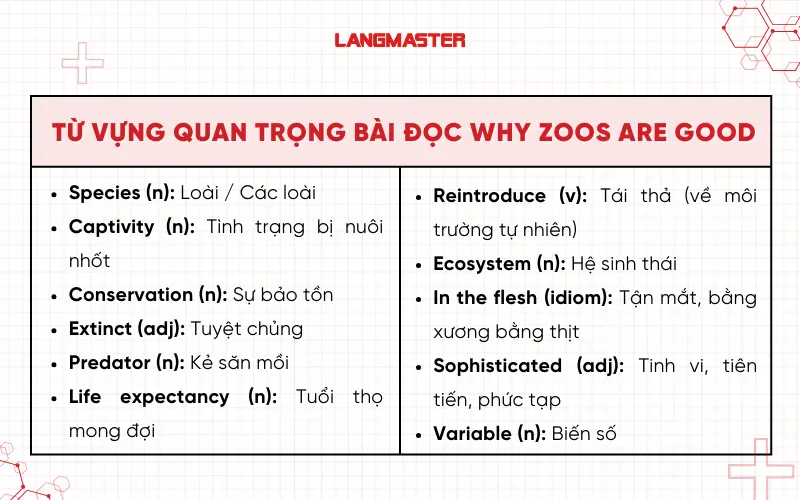
Species (n) - /ˈspiːʃiːz/: Loài / Các loài (số ít và số nhiều như nhau)
Ví dụ: Many species of animals are facing extinction.
Dịch: Nhiều loài động vật đang đối mặt với sự tuyệt chủng.
Captivity (n) - /kæpˈtɪvəti/: Tình trạng bị nuôi nhốt
Ví dụ: A species protected in captivity can be bred up.
Dịch: Một loài được bảo vệ trong môi trường nuôi nhốt có thể được nhân giống.
Conservation (n) - /ˌkɒnsəˈveɪʃn/: Sự bảo tồn
Ví dụ: Zoos aid conservation by protecting endangered animals.
Dịch: Sở thú hỗ trợ bảo tồn bằng cách bảo vệ các động vật đang gặp nguy hiểm.
Extinct (adj) - /ɪkˈstɪŋkt/: Tuyệt chủng
Ví dụ: Colossal numbers of species are becoming extinct.
Dịch: Một số lượng khổng lồ các loài đang trở nên tuyệt chủng.
Predator (n) - /ˈpredətə(r)/: Kẻ săn mồi
Ví dụ: Animals in zoos do not suffer from the threat of predators.
Dịch: Động vật trong sở thú không phải chịu đựng mối đe dọa từ kẻ săn mồi.
Life expectancy (n) - /ˈlaɪf ɪkspektənsi/: Tuổi thọ mong đợi
Ví dụ: Captive animals have a greater life expectancy than wild ones.
Dịch: Động vật nuôi nhốt có tuổi thọ cao hơn so với động vật ngoài hoang dã.
Reintroduce (v) - /ˌriːɪntrəˈdjuːs/: Tái thả (về môi trường tự nhiên)
Ví dụ: Some species only exist in the wild because they have been reintroduced.
Dịch: Một số loài chỉ tồn tại trong tự nhiên vì chúng đã được tái thả.
Ecosystem (n) - /ˈiːkəʊsɪstəm/: Hệ sinh thái
Ví dụ: We need to restore and repair ecosystems.
Dịch: Chúng ta cần phục hồi và sửa chữa các hệ sinh thái.
In the flesh (idiom): Bằng xương bằng thịt (nhìn thấy trực tiếp)
Ví dụ: There is nothing to compare with seeing a living creature in the flesh.
Dịch: Không có gì so sánh được với việc nhìn thấy một sinh vật sống bằng xương bằng thịt.
Sophisticated (adj) - /səˈfɪstɪkeɪtɪd/: Tinh vi, phức tạp, tiên tiến
Ví dụ: Zoos are now increasingly sophisticated in their communication.
Dịch: Các sở thú hiện nay ngày càng tiên tiến hơn trong công tác truyền thông.
Variable (n) - /ˈveəriəbl/: Biến số (yếu tố có thể thay đổi)
Ví dụ: Researching in zoos involves fewer variables than in the wild.
Dịch: Nghiên cứu trong sở thú ít biến số hơn so với ngoài tự nhiên.
Anesthetic (n) - /ˌænəsˈθetɪk/: Thuốc mê/thuốc tê
Ví dụ: Knowledge gained in zoos helps determine the doses for anesthetics.
Dịch: Kiến thức thu được từ sở thú giúp xác định liều lượng thuốc mê.
>> Xem thêm: Thời gian làm Reading IELTS: Chiến lược phân bổ và mẹo làm bài hiệu quả
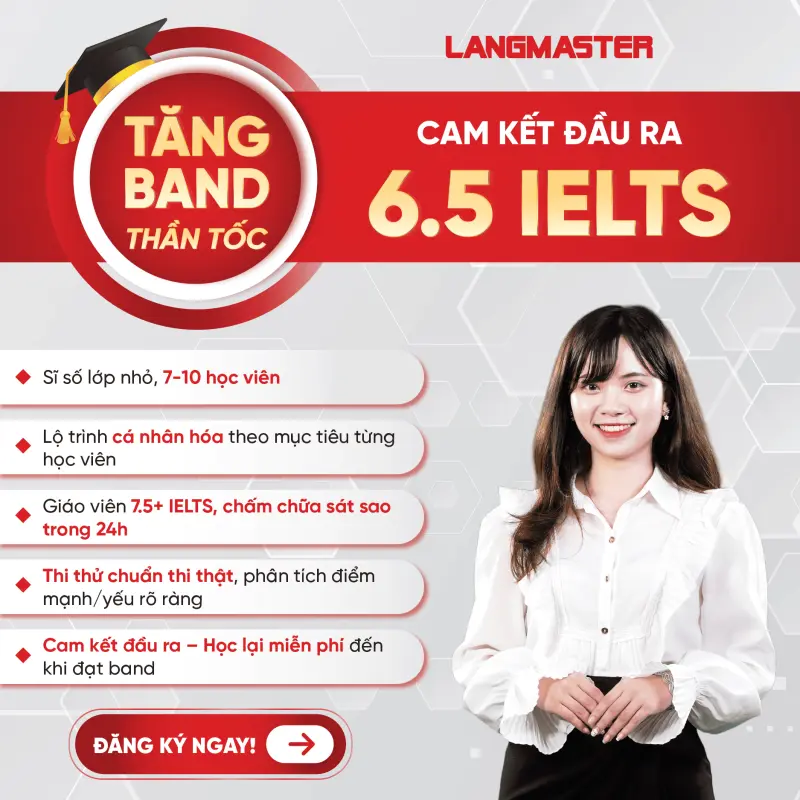
Để đạt điểm cao trong IELTS Reading nói riêng và overall nó chung, điều quan trọng là học theo một lộ trình khoa học, có sự kèm cặp của giảng viên và nhận được phản hồi cụ thể cho từng bài làm. Đây cũng chính là lý do nhiều bạn tin tưởng lựa chọn khóa học IELTS online tại Langmaster – khóa học chuyên biệt cho người mới bắt đầu, mất gốc giúp học viên đi đúng lộ trình ngay từ đầu, tiết kiệm thời gian và chi phí.
Khóa học IELTS Online tại Langmaster được thiết kế dựa trên giáo trình chuẩn đề thi thật, kết hợp học cá nhân hóa và phản hồi 1-1 từ giảng viên 7.5+ IELTS, giúp học viên phát triển toàn diện cả 4 kỹ năng: Listening, Speaking, Reading, và Writing.
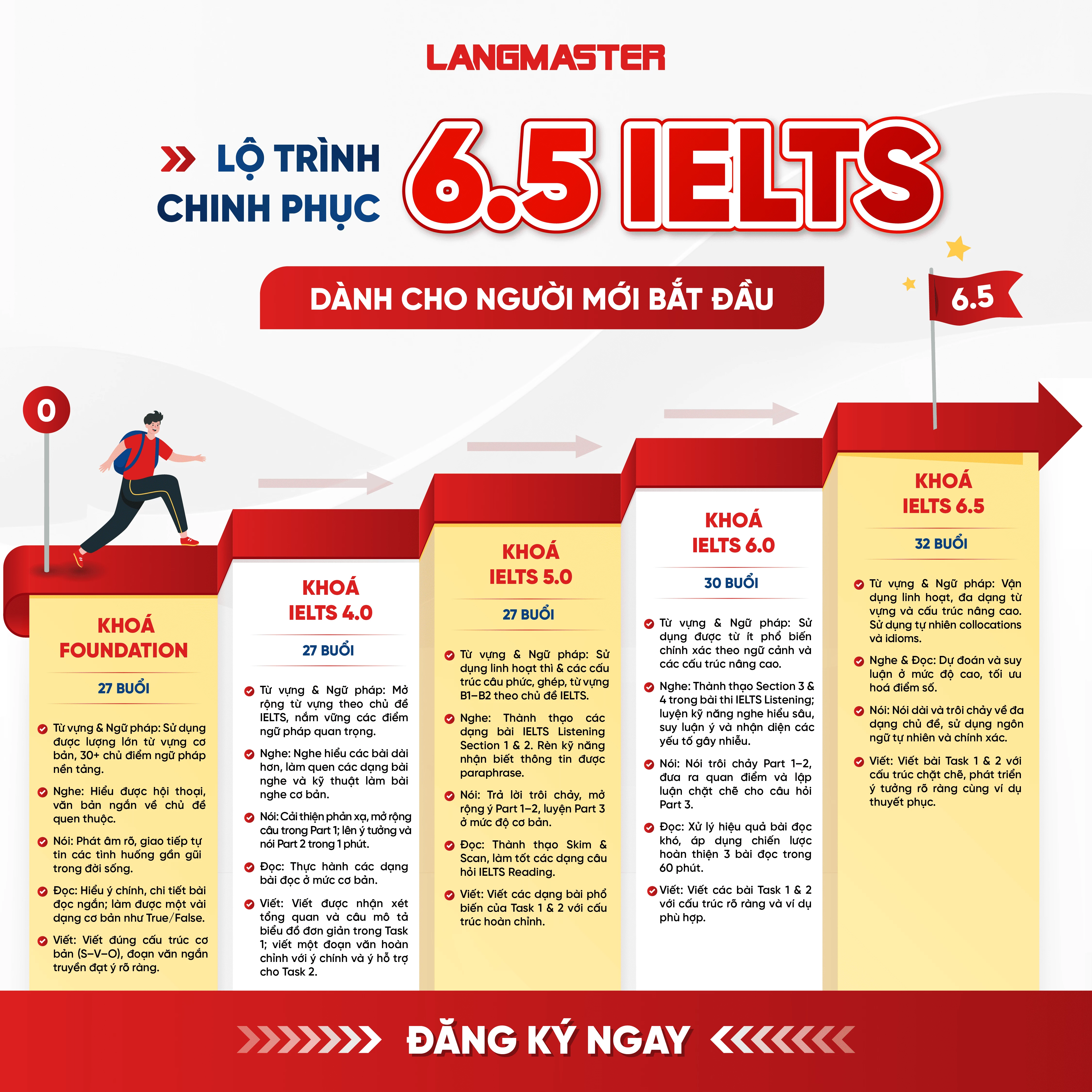
Ưu điểm nổi bật của khóa học IELTS Online Langmaster:
Lớp học quy mô nhỏ (7–10 học viên): Tại Langmaster, các lớp IELTS online chỉ 7–10 học viên, tạo môi trường học tập tập trung và tương tác cao. Nhờ vậy, giảng viên có thể theo sát, góp ý và chỉnh sửa chi tiết cho từng học viên – điều mà lớp học đông khó đáp ứng.
Lộ trình cá nhân hóa: Langmaster xây dựng lộ trình học cá nhân hóa dựa trên kết quả kiểm tra đầu vào, tập trung vào kỹ năng còn yếu và nội dung theo band điểm mục tiêu. Nhờ vậy, học viên được học đúng trình độ, rút ngắn thời gian và đạt hiệu quả tối ưu.
Giáo viên 7.5+ IELTS – chuyên gia luyện thi uy tín: Tại Langmaster, 100% giáo viên sở hữu IELTS từ 7.5 trở lên, có chứng chỉ sư phạm quốc tế CELTA và nhiều năm kinh nghiệm luyện thi. Đặc biệt, giáo viên luôn chấm và phản hồi bài trong vòng 24h, giúp học viên tiến bộ nhanh và duy trì hiệu quả học tập liên tục.
Các buổi coaching 1-1 với chuyên gia – Tăng tốc hiệu quả: Trong suốt khóa học, học viên được kèm cặp qua các buổi coaching 1-1 với chuyên gia IELTS, tập trung ôn luyện chuyên sâu, khắc phục điểm yếu và củng cố kiến thức. Đây là yếu tố quan trọng giúp cải thiện điểm số nhanh chóng và bứt phá hiệu quả.
Thi thử định kỳ chuẩn đề thật: Học viên được tham gia thi thử định kỳ mô phỏng phòng thi thật, giúp rèn luyện tâm lý và kỹ năng làm bài thi hiệu quả. Sau mỗi lần thi, bạn sẽ nhận được bản đánh giá chi tiết về điểm mạnh – điểm yếu, cùng với định hướng cải thiện rõ ràng cho từng kỹ năng.
Chi phí tiết kiệm - Cam kết đầu ra, học lại miễn phí: Học phí chỉ từ 2-3 triệu đồng/ tháng. Langmaster là một trong số ít đơn vị cam kết band điểm đầu ra bằng văn bản. Trong trường hợp học viên không đạt band điểm mục tiêu dù đã hoàn thành đầy đủ yêu cầu khóa học, sẽ được học lại hoàn toàn miễn phí.
Học trực tuyến linh hoạt: Lịch học online linh hoạt, tiết kiệm thời gian di chuyển và dễ dàng ghi lại buổi học để ôn tập.Giáo viên theo sát và gọi tên từng học viên, kết hợp bài tập thực hành ngay trong buổi học. Không lo sao nhãng, không lo mất động lực học.
Ưu đãi đặc biệt – HỌC THỬ MIỄN PHÍ: Giúp bạn trải nghiệm phương pháp giảng dạy và cảm nhận sự khác biệt ngay từ buổi học đầu tiên.
KẾT LUẬN: Như vậy, chúng ta đã vừa cùng nhau phân tích và giải chi tiết đề IELTS Reading Why zoos are good - Cam 14, Test 4, Passage 2 . Bài viết đã làm rõ các kỹ năng cần thiết để tìm thông tin, nhận biết từ khóa và áp dụng chiến lược đọc hiểu hiệu quả. Hy vọng hướng dẫn này sẽ giúp bạn tự tin hơn khi làm bài và cải thiện điểm số Reading IELTS. Chúc bạn học tập hiệu quả và đạt kết quả cao trong kỳ thi IELTS sắp tới!




Các dạng bài phổ biến và tiêu chí chấm điểm IELTS Reading chi tiết nhất: Multiple Choice, Matching Information, Matching Headings,... và hướng dẫn chiến lược làm bài hiệu quả

Những sai lầm khi luyện IELTS Reading bao gồm: dịch từng từ, đọc hết cả bài, không đọc câu hỏi trước, không quản lý thời gian, không nắm vững kỹ năng paraphrase, viết sai chính tả
![Giải đề IELTS Reading: A brief history of humans and food [full answers]](https://langmaster.edu.vn/storage/images/2025/09/20/a-brief-history-of-humans-and-food-ielts-reading-answers.webp)
Giải đề thi IELTS Reading “A brief history of humans and food” kèm full đề thi thật, câu hỏi, đáp án, giải thích chi tiết, và từ vựng cần lưu ý khi làm bài.
Tổng hợp IELTS Reading tips hay nhất giúp bạn đọc nhanh, nắm ý chính và xử lý thông tin chính xác, tự tin đạt điểm cao trong kỳ thi IELTS.
![Giải đề IELTS Reading: The importance of law [Full answers]](https://langmaster.edu.vn/storage/images/2025/09/22/55.webp)
Giải đề IELTS Reading “The importance of law” kèm đáp án chi tiết, từ vựng quan trọng và bí quyết luyện thi hiệu quả để nâng cao band điểm.





Hơn 16 năm kinh nghiệm, đào tạo thành công 800.000+ học viên
Phương pháp giảng dạy hiện đại, học viên tiến bộ rõ rệt
Lộ trình học chuẩn quốc tế, phù hợp với nhu cầu thực tiễn
Giáo viên đạt chuẩn Quốc tế với chất lượng top đầu thị trường, giàu kinh nghiệm
Học online linh hoạt, cam kết đầu ra bằng văn bản


.png)